Coral Reef Restoration
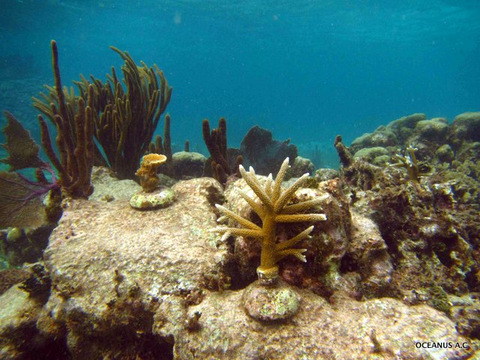
Construction of coral nurseries and transplanting thousands of colonies per year of Acropora palmata and A. cervicornis across 18 active sites in the Gulf and Mexican Caribbean.
View programSince 2006, we have restored marine ecosystems of the Gulf of Mexico and the Mexican Caribbean through science, community action, and the generosity of people like you.
Oceanus, A.C. is a Mexican nonprofit based in Quintana Roo. We develop coral reef conservation projects with over 18 years of experience in research, monitoring, and active restoration.
Founded in 2006 by Miguel García and Gabriela Nava, M.Sc., we contribute to the conservation and sustainable use of Mexico's marine and coastal resources.
We restore ecosystems and train the next generation of marine restoration specialists in the Mexican Caribbean.
Construction of coral nurseries and transplanting thousands of colonies per year of Acropora palmata and A. cervicornis across 18 active sites in the Gulf and Mexican Caribbean.
View programWe recover mangrove ecosystems — the first line of coastal defense and a critical habitat for marine biodiversity and blue carbon capture.
View programWe train marine restoration specialists using cutting-edge scientific techniques and direct field experience at active sites across the Mexican Caribbean.
View programFrom Veracruz in the Gulf to Xcalak in the southern Caribbean, we operate the most extensive reef restoration network in the country.
Click a marker
to view site data
With just $500 MXN we transplant a coral colony at an active Caribbean site. Receive a personalized certificate and photos of the process.
Drag the bar to compare the Puerto Morelos reef before and after Oceanus intervention. Real results documented by our field team.
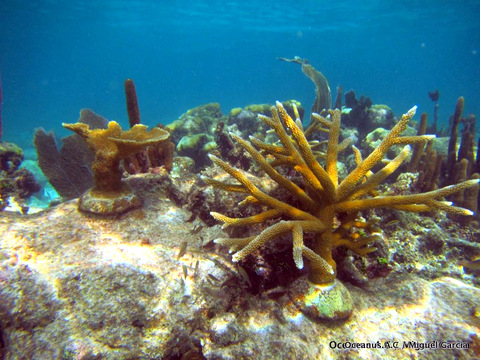
After 10 months of growth
Initial state
Institutional donors, protected natural areas, governments, hotels, and research centers supporting our marine restoration network in Mexico.

"In 30 years we could recover ocean health if we restore major coastal ecosystems such as coral reefs." — Duarte et al. 2020