We restore coral reefs and mangroves and train the next generation of marine restorers in the Mexican Caribbean with scientific methodology proven over 16 years.
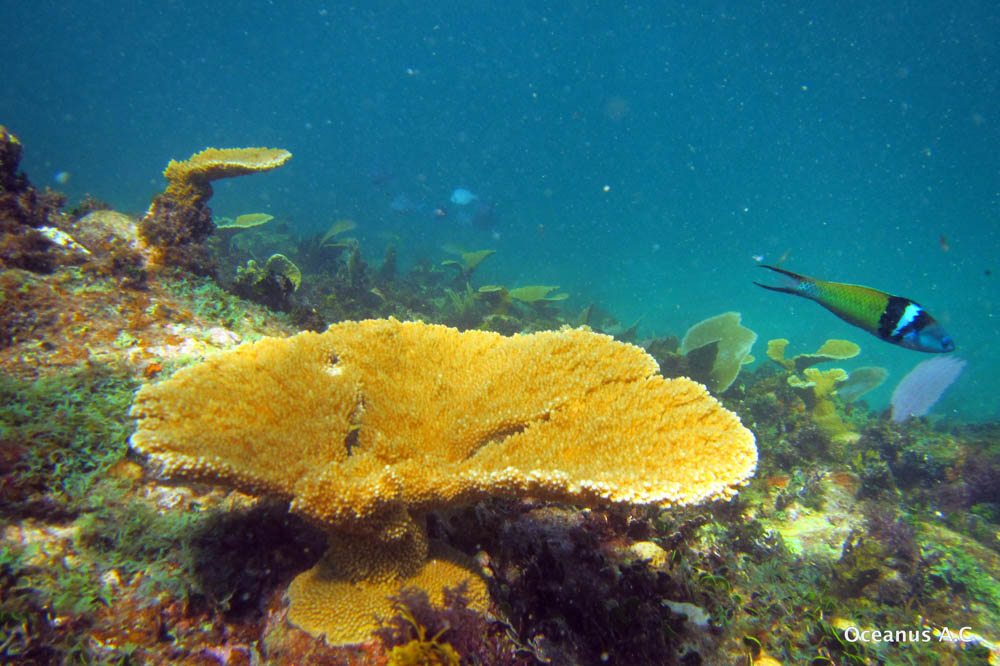
Our main program has operated since 2009, building underwater coral nurseries and actively transplanting colonies of Acropora palmata and A. cervicornis — the two reef-building species of the Caribbean, listed as threatened.
Each colony is produced in tree and table nurseries at 3–8 meters depth, grows for 6 to 12 months and is transplanted to the reef with marine cement substrate. Its location is georeferenced with GPS coordinates for monitoring and follow-up.
Data verified as of December 2025 · Source: Oceanus, A.C. field records
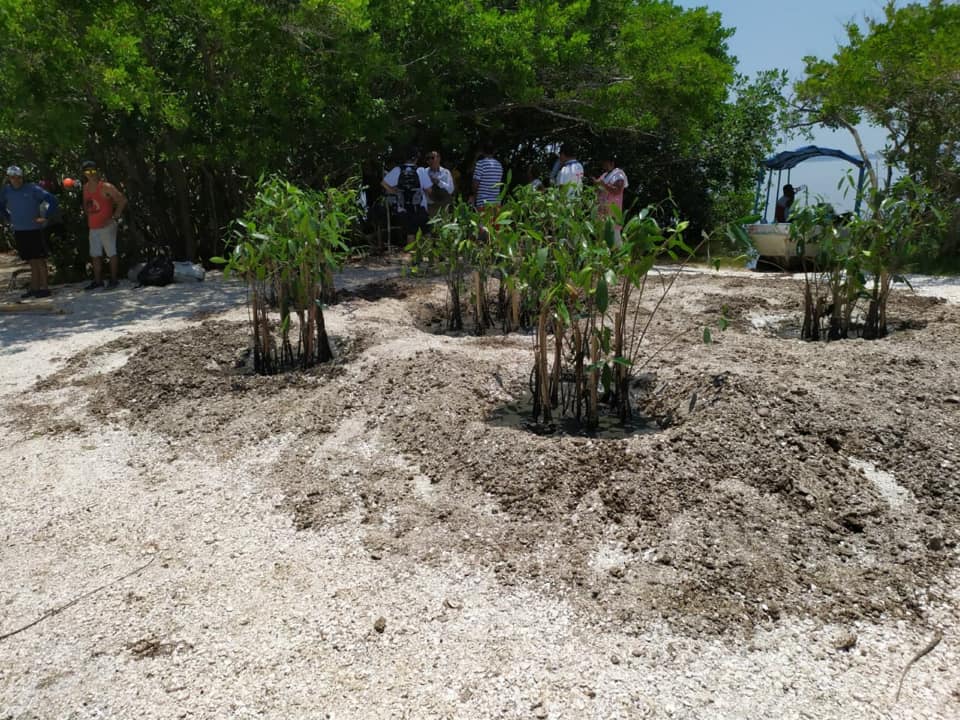
Mangroves are the first line of coastal defense and critical habitat for the recruitment of commercial fish and Caribbean marine life. Their degradation directly affects reef health by increasing sedimentation and reducing water quality.
We work to recover mangrove ecosystems in the Gulf of Mexico and the Mexican Caribbean through propagation of native seedlings, active reforestation and removal of local pressures, in coordination with fishing communities and protected natural areas.
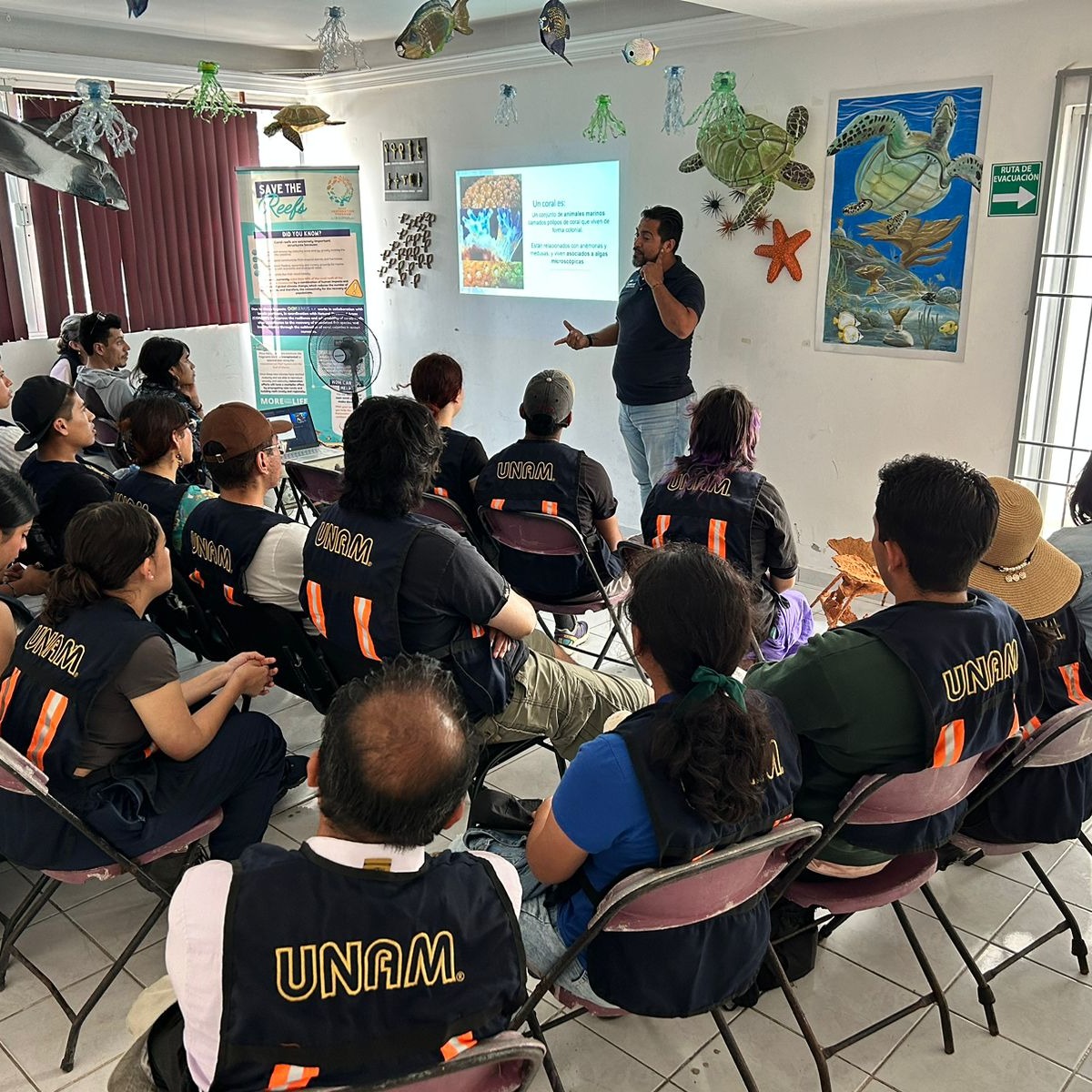
Sustainable restoration requires local capacity. Our Training Center prepares marine biologists, scientific divers and technicians specialized in reef monitoring and restoration methodologies, with direct experience at active sites in the Caribbean.
Participants learn everything from species identification and nursery construction to transplanting techniques and survival analysis — all under real field conditions, accompanied by our team of experts.
With $500 MXN you fund the transplanting and monitoring of a native coral colony. Your donation is tax-deductible (ISR) and you'll receive an adoption certificate for your colony.
